Introduction | The NZ Football Season Has Begun.

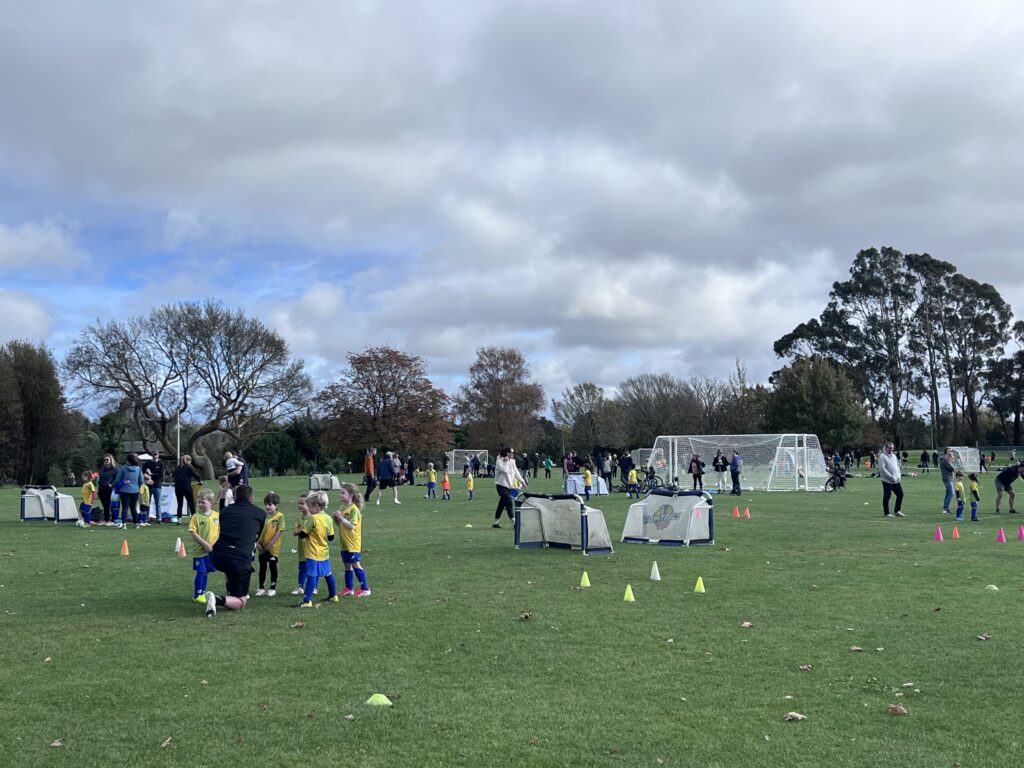
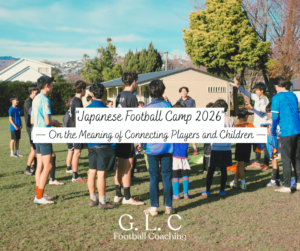
The first session of this season’s First Kicks took place recently.
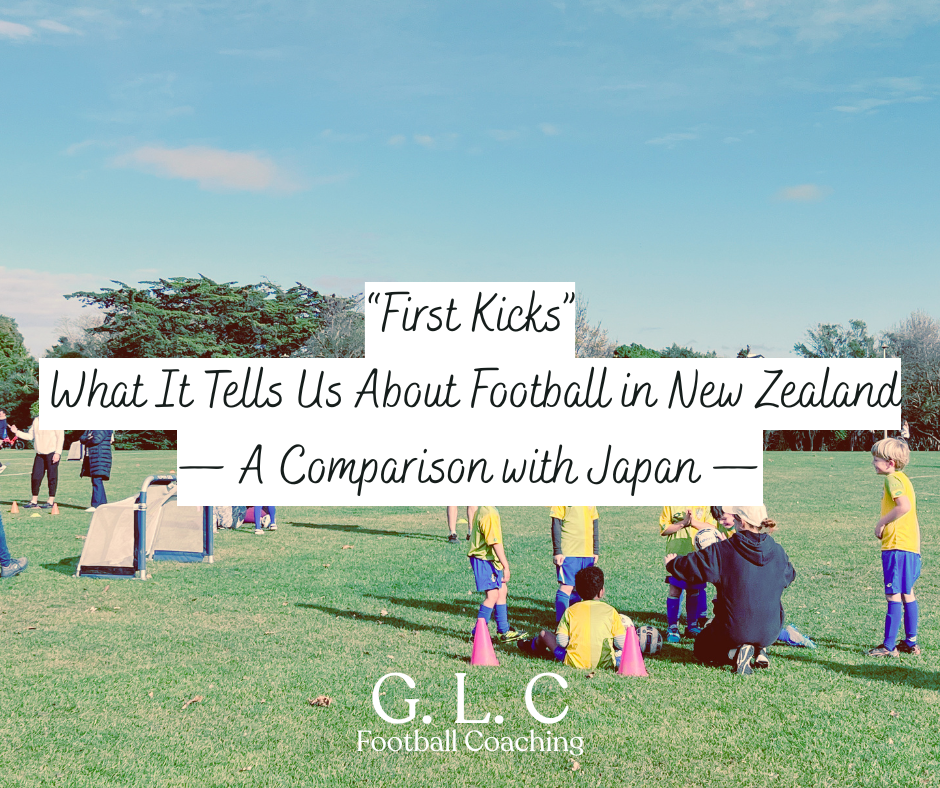
A wide stretch of grass. Small goals dotted around the field. And little children chasing after a ball.
Around them, families with dogs. Parents lying on the grass, watching their children with a relaxed smile. The atmosphere was closer to a picnic than a training session.
What I felt as a coach standing there was not the energy of a “development programme” — but something more like a community simply coming together through football.
For me, having started football in Japan, this was a genuinely beautiful sight.
What Is First Kicks?
First Kicks is a nationwide football introduction programme for young children in New Zealand, primarily aimed at those aged 3 to 9.
Sessions involve simple drills, basic activities, and — above all — lots of games.
Just touching the ball, moving the body, and going home with a smile.
The purpose is straightforward: to give as many children as possible a first experience of football.
Most sessions are run by volunteers — club players and parents — rather than trained specialist coaches. It’s less about formal instruction and more about a community coming together with a shared sense of “let’s raise these kids together.”
The Vertical Connection of a “Club” | One Club from First Kicks to the Top Team
There is something you notice at First Kicks.
The people volunteering alongside the children are often players from the same club’s senior team.
A three-year-old kicks a ball, and standing right there watching over them is an adult who will play a competitive match that same weekend. This scene captures something essential about club culture in New Zealand.
In many NZ clubs, everything is connected — from First Kicks through U-6, U-8, all the way up to the senior team — under one roof.
It goes beyond wearing the same colours.
They share the same ground, gather at the same clubhouse, and know each other as members of the same community. A young child looks up to the U-12 players a few years ahead of them. A U-12 player sees senior players showing up to volunteer at First Kicks.
A child’s “future self” in football exists in the same place they are right now.
That, I think, is the quiet but powerful strength of New Zealand’s club-based development model — and it is one of the biggest differences from Japanese football culture.
The Japanese Contrast | A Society Where Schools Carry the Responsibility of Development
Football programmes for young children exist in Japan too. But the dominant model is quite different — specialist schools running as a business.
Families pay monthly fees to a local or regional football school, and children receive coaching. There is nothing wrong with that in itself.
But in Japan, the responsibility for development tends to concentrate within the school or club. Parents are often positioned as customers receiving a service — slightly distanced from the development environment itself.
There is another characteristic that emerges from Japan’s school-based culture: development and competition tend to exist as separate communities. A primary school football school, a junior high club team, a high school sports club, an adult team — each operates as its own independent organisation, and the vertical connections between them rarely form naturally.
It is also worth noting that in Japan, it is rare to see hundreds of young children all gathering in one place to play football under a single club. More typically, children are spread across multiple smaller clubs of a few dozen each.
At First Kicks, what strikes me is not simply the difference in scale — it is the difference in how people are involved, and which communities take on what role.
The Fact That Wide Open Parks Exist
Let me shift perspective for a moment.
Why can something like First Kicks even exist in New Zealand? I believe part of the answer lies in the environment itself.
NZ has vast public parks — large enough to hold hundreds of people — scattered throughout its towns and cities. No entrance fee. No reservation needed. Just grass, whenever you need it.
In urban Japan, this is far from a given. To secure a wide, open grassy space where children can run freely, a significant amount of cost and coordination is typically required.
The reason First Kicks feels like a picnic is not just the programme design or the coaching approach — it is because that kind of space already exists in the community.
Sports culture is shaped, in part, by the number and quality of open spaces. First Kicks, quietly, reminds us of that.
Dogs, Grass, and Just Being There — That’s Enough
Let me share a little more of what the session actually looked like.
Many families came with their dogs. Some parents were lying on the grass, watching their children from a distance. Others were snacking, chatting, just being there.
It felt different from the atmosphere of “parents who have come to watch football” in Japan.
In Japan, it’s common to see parents lined up along the touchline, watching intently, calling out encouragement, sometimes getting caught up in the moment. That level of passion and care is admirable.
But at First Kicks, what I noticed was something different — “watching over” and “enjoying yourself” were happening at the same time.
Children chasing the ball. Parents relaxed on the grass. And through all of it, a quiet sense of community time flowing naturally.
This is not indifference. It is, I think, football being placed naturally within family life — rather than being something separate from it.
Conclusion | The Shape of a “First Step”
What a child’s first encounter with football looks like — that quietly shapes how they will feel about the game for years to come.
At First Kicks, there are no winners or losers. Skill level barely matters. There is just a ball, some friends, parents nearby, a dog or two — and older players from the same club running alongside them.
That “first step” might be closer to the true essence of football — enjoying it together with others — than we sometimes realise.
This season, scenes like this are beginning again, all across Christchurch.