Introduction | A Question Worth Asking
When children play football abroad or in a different culture, parents tend to worry about the same kinds of things.
Will they make friends? Will they keep up at school? Will they fit in with the team?
But there is one question that often gets overlooked when it comes to football specifically:
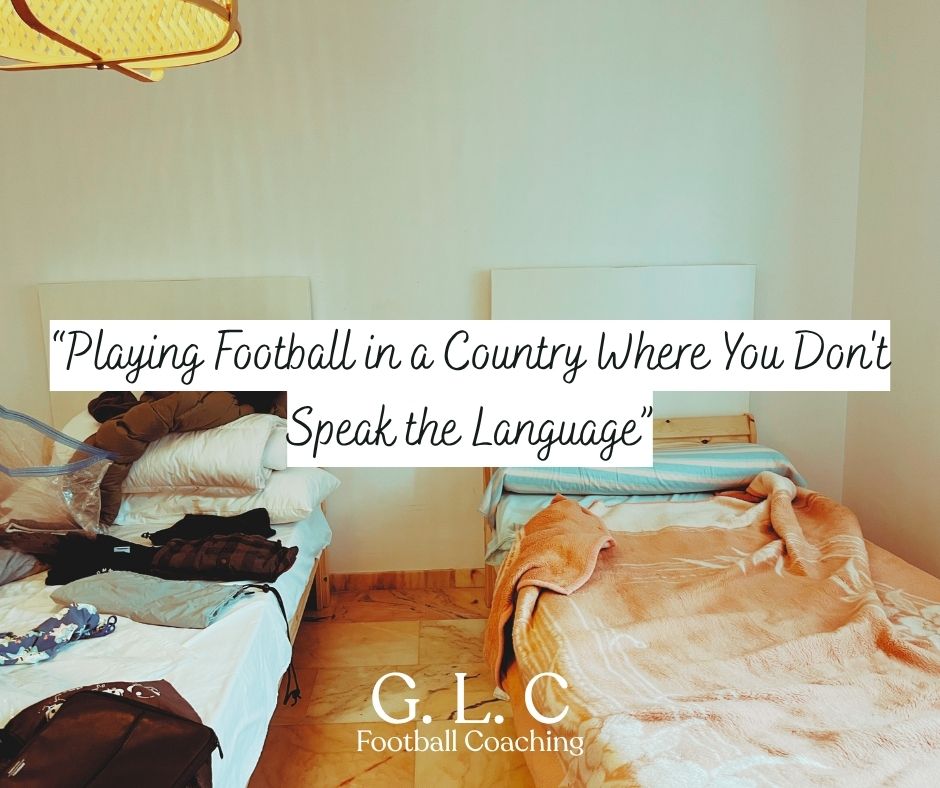
“What does it actually do to a child — to play in a country where they don’t speak the language?”
Not just playing abroad in a general sense. But being in an environment where the coach’s instructions don’t fully land, where conversations with teammates are only half understood, where even a simple call during a match takes a moment longer to process — what does that kind of environment produce?
I have experienced this firsthand, playing in countries where my native language didn’t reach me — Spain, New Zealand, and others. What I found was a little different from what I had expected.
It wasn’t easy. But looking back, it was one of the most significant experiences of my footballing life.
“Playing Abroad” and “Playing in a Different Language” Are Not the Same Thing
When we talk about the experience of playing football overseas, the focus tends to fall on cultural differences — the style of play, the coaching philosophy, the relationship between players and coaches. All of that matters enormously.
But when you add the element of a different language, the experience takes on an entirely different dimension.
Imagine a ten-year-old in a training session where the coach gives a five-sentence explanation and they catch perhaps two words. They look around at their teammates, guess, copy, and give it a go.
That experience — of having no reliable foothold in language — triggers something inside a player. Something that a familiar, comfortable environment rarely does.
What I Noticed in Myself ① | I Started to See More
When I entered an environment where I couldn’t rely on language, the first thing I noticed was that I started to watch more than I ever had before.
Not passively — but sharply, almost instinctively. My eyes were drawn to the coach’s gestures and positioning. I tried to read my teammates’ movements before any words came. I began to sense patterns in the game for myself, rather than waiting for someone to explain them.
When language is restricted as a source of information, your other senses step in to compensate.
Your eyes work harder. Your spatial awareness sharpens. You begin to understand the game through your body and your instincts rather than through words.
It wasn’t the result of any particular drill or coaching. It was necessity, forcing my attention to work differently.
What I Noticed in Myself ② | Mistakes Felt a Little Lighter
There was something else I felt — something harder to put into words.
In Japan, mistakes carry a certain weight. Getting something wrong in front of your teammates comes with an awareness of eyes and atmosphere. The sense of how you are being perceived quietly influences the way you play.
But in an environment where I didn’t speak the language, something shifted.
When I made a mistake and a teammate said something, I didn’t always catch exactly what. And strangely, that gave me a kind of freedom. Without receiving the criticism in full, I didn’t carry it as long. It became easier to switch focus and move on to the next play.
I started taking more risks. I tried things I might have hesitated over back in Japan. Not recklessly — but with a lightness I hadn’t felt before.
I don’t think this is unique to me. For players who come from cultural backgrounds where the fear of failure runs deep, an environment without a shared language can quietly lift some of that weight.
Becoming Open to Difference
The thing that stayed with me longest from playing in a language-barrier environment was a shift in how I related to difference itself.
When communication is difficult, quick judgement becomes impossible. You lose the shortcut of language — the ability to categorise, compare, and conclude through words. So you observe. You wait. You try to understand without the comfort of a shared vocabulary.
That accumulation builds a particular kind of openness.
Not the kind of openness that is merely a polite attitude — but the kind that becomes a trained instinct: I don’t fully understand this yet, so I’ll keep watching.
In football terms, I became more comfortable with uncertainty. I stopped trying to decide what a teammate’s run meant before I had really read it. Rather than reacting and assuming, I learned to observe, wait, and feel.
That approach gradually spread beyond football and into everyday life.
To Parents | “Not Understanding” May Not Be a Weakness
For parents reading this — particularly those whose children speak Japanese at home and are playing football in an English-language environment here in New Zealand — this is directly relevant.
Your child may feel like they are at a disadvantage right now. They don’t catch everything the coach says. They can’t fully join every conversation. They might come home saying “I didn’t really understand what was going on.”
But I’d like to offer a different perspective.
The experience of pushing through that gap is building something in your child that years of comfortable, familiar training rarely can.
Attention — the ability to read a situation when words aren’t enough.
Resilience — the ability to keep going without the complete picture.
Openness — the ability to connect with people from different backgrounds, not through words, but through movement and shared intention.
Closing | A “Common Language” Is Only Felt by Playing Without One
We often hear that football is a universal language.
I believe that’s true. There are professional players all over the world who have thrived without speaking the local language. But I don’t think it happens automatically — I think it is felt, truly felt, through the experience of playing without words.
When you can’t lean on language, the essence of football becomes clear. Movement, intention, read, react, trust. None of it requires a shared vocabulary.
Children who have played in environments where language was a barrier carry something quietly remarkable with them — not just as footballers, but as people who have learned to observe within difference, to resist the rush to judge, and to find connection where words run out.
That, I believe, stays with them far longer than any skill learned on a training pitch.
At Glocal Football, experiencing different cultures through football is something we hold at the heart of what we do. Within that, we hope to actively create opportunities for players to experience football in environments where the language itself is different — because we believe that is where some of the deepest growth begins.