Introduction | “My Child Never Gets a Break — Is That Okay?”
“What should my child actually do during the off-season?”
Whenever I get this question from parents, I realise it’s actually a genuinely difficult topic. Having played both in Japan and New Zealand, what struck me is that these two countries hold almost opposite views on what an “off-season” even means.
In Japan, there is barely such a thing as an off-season. In New Zealand, by contrast, the official football season lasts only about half the year. Even though both countries are talking about the same “one year of a young player’s development,” the way that year is structured couldn’t be more different — and honestly, that surprised me at first.
Today I want to compare these two contrasting approaches and share my own thinking on what it means to rest.
Japan: A Reality Where the Off-Season Barely Exists
In Japanese youth football — especially in school club (bukatsu) culture and club teams — training and matches continue almost year-round with barely a pause. Even summer and winter holidays tend to be filled with training camps and tournaments rather than rest. The very idea of “taking a break” doesn’t really exist as part of the culture.
Looked at the other way, this means an enormous amount of time is spent engaging with the game. Since technical skill is built through repetition, this is a genuine strength of the Japanese system.
New Zealand: A Season That Lasts Only Half the Year
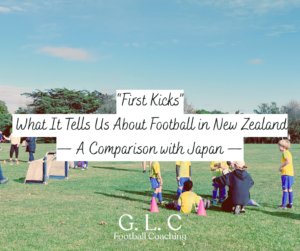
New Zealand sits at the opposite end. The official football season runs for roughly six months over winter, and outside of that, kids typically move on to entirely different sports — rugby, cricket, netball. Football rarely dominates the full calendar year here.
This can be seen as “less time available for football,” but it’s equally true that it gives kids the chance to experience a wide range of sports.
At the same time, that limited exposure to football doesn’t just affect technical skill — it also affects what I’d call “football intelligence.” Decision-making, reading the game, understanding a team’s shared principles — these are things that build up gradually through sustained, repeated exposure to the sport. With only half a year of season, the opportunity to accumulate that understanding is naturally limited too. Watching New Zealand players, I often notice a gap between their strong physical ability and their speed of decision-making or range of tactical options in the moment — and I think this structural difference is part of the reason why.
Both Approaches Have Clear Strengths and Weaknesses
To put it bluntly, my honest view is that Japan does too much, and New Zealand does too little. Let me lay out the strengths and weaknesses of each.
Japan’s year-round, no-break approach to football builds strong technical retention and a deep immersion in the game. On the other hand, it increases the risk of overuse injuries during periods when the body is still developing, and it forecloses the chance to develop varied movement patterns that come from other sports.
New Zealand’s model of juggling multiple sports, by contrast, has real value in broadening a young athlete’s physical toolkit. The contact strength built through rugby, or the hand-eye coordination developed through cricket, eventually feeds back into football in ways that aren’t always obvious. A proper off-season also gives a growing body the rest it needs to develop. Still, the reality remains that six months of football a year simply isn’t enough total volume for anyone seriously aiming for the top level.
What I Learned From Growing Up With Almost No Off-Season
Honestly, I’m one of those players who grew up with almost no off-season at all. Looking back, I never developed a sense that rest is also part of growth — I just kept playing, continuously. It’s only now that I wonder whether continuing to load a body that hadn’t fully developed yet, without rest, has left some mark on me physically.
That’s exactly why I believe an off-season shouldn’t be thought of as “a period without football,” but rather as “a period that makes you want more football.” When you’re immersed in the game constantly, without realising it, it becomes just another routine — something you take for granted. Stepping away for a while is precisely what creates that rush of excitement, that itch to get the ball at your feet again, the moment a new season begins. I’ve come to believe strongly, through my own experience, that this cycle of building up desire and then releasing it is what keeps young players moving toward the game for the long haul — and in a healthy way.
Spain: A “Third Way”
So is there nothing in between these two extremes? Not quite — and I think Spain’s model offers a useful reference point.
Spanish youth football runs on a genuine year-round league system, with official matches held nearly every weekend from late September through to the end of May. The total number of official matches per season actually exceeds Japan’s, so the overall volume of activity is far from small.
And yet, individual training sessions are kept remarkably short. For primary-school-age players, sessions rarely exceed 75 minutes — there’s simply no culture of training longer than that. The logic is simple: a match itself lasts around 60 minutes, so there’s no need to train for longer. On top of that, there’s a solid two-month break over summer, plus a week-long break during the season known as “Semana Santa.”
In other words, Spain isn’t following Japan’s “pack everything in, no breaks” model, nor New Zealand’s “cut the season in half” model. Instead, it takes a third approach: staying active year-round, but carefully balancing volume and quality, with proper rest periods built into the structure.
What Glocal Football Is Aiming For
Comparing these three countries, what I keep coming back to is this: rest and hard work aren’t opposing forces. It’s only when both are present that a young player actually develops.
That’s why, at Glocal Football, we’re not aiming to disappear from football entirely once the off-season hits, like the New Zealand model — nor are we trying to pack in training without a break, like the Japanese model. Instead, we want to offer a year-round environment where kids can engage with football whenever that desire to play kicks in. Christchurch still doesn’t have many environments like this. Whether rugby season has just ended, or it’s a quiet stretch between netball fixtures, having a place where a child can go and kick a ball whenever the feeling strikes — that’s what we believe genuinely nurtures the “I want to play more football” instinct that’s already sitting inside every kid.
And within this year-round engagement, there’s one more thing I take seriously — the football intelligence piece I mentioned earlier. At Glocal Football, we’re not just offering time with a ball; we put real care into breaking down individual and group tactics in detail. Where to look and how to decide in a 1v1 situation, how to coordinate as a group to win the ball back — rather than letting players pick these things up vaguely within a short season, we build them deliberately and continuously, all year round. Through that process, we want to send out players who can develop strong decision-making and a wide tactical range, even within an environment like New Zealand’s.
There’s more than one way to build a relationship with football around the world. None of them is the single “right answer” — and I hope that by understanding how different countries approach it, we can work together to find the right balance for your own child.