Introduction | The Moment I Lost My Words Looking at the Stands
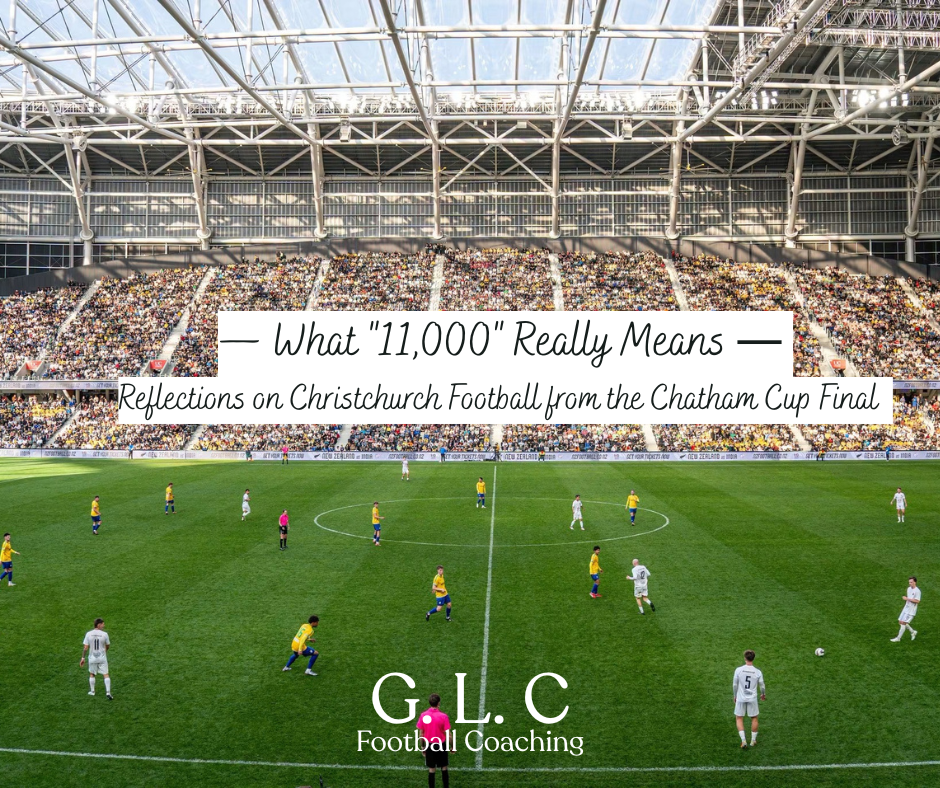
On 5 September 2026, the Delivereasy Chatham Cup final between Cashmere Technical and Fencibles United was played at the brand-new One NZ Stadium. It was the first football match ever held at the stadium, and the first time a Chatham Cup final had been staged in Christchurch since 2013.
I played that match as part of Cashmere Technical. The result was a disappointing one, but I wanted to use this article to honestly record what I felt standing on that pitch that day.
Walking out from the locker room before kickoff, I was genuinely lost for words when I saw the size of the stands and how many people had filled them. More than ten thousand spectators. Seeing a crowd like that for an amateur club match was, honestly, something I had never experienced in my playing career.
As a footballer, playing in a stadium and playing in front of a big crowd is, without question, one of the most joyful things there is. That feeling doesn’t change no matter what level the match is being played at.
1. Why “10,000” Means Something Different from “50,000”
In Japan, high school football is a deeply rooted culture, and national tournaments can draw crowds of nearly 50,000. That said, I never had that kind of experience myself. Perhaps that’s exactly why I feel the weight of this 10,000-person crowd can’t simply be measured against those bigger numbers.
In countries where football culture runs deep, like in Europe, or where school sport is firmly embedded in society, like in Japan, drawing a large crowd happens on top of a foundation that already exists. I think what happened this time was fundamentally different.
Christchurch still doesn’t have a professional club. And yet, in this city, an amateur club match drew more than ten thousand people. That wasn’t the result of stepping onto ground that culture had already built — it was the result of us building the stage for that final from nothing, and actively working to bring the crowd in ourselves. I believe that was a significant step forward for the growth of football culture in Christchurch.
2. The Players on That Pitch Weren’t “Just Footballers”
Most of the players in that match aren’t professionals. They’re people holding down full-time jobs, or studying as students, fitting football into whatever time they have left. I’m the same way — working at a café, coaching at Glocal Football, and carving out time for training and matches around all of that.
Players like that, stepping straight out of their busy everyday lives, stood in front of ten thousand people. I think that gap was exactly what made that day on the pitch so special.
3. What I Hope the Kids Take From This Goes Further Than Us
There’s something I want to say to the kids we coach at Glocal Football, and to the parents reading this.
If seeing us out there made even one child think, “I want to be like that,” there’s nothing that would make me happier. But personally, I don’t want it to stop there. I hope they don’t stop at wanting to be like us amateur players — I hope they look further, to professional footballers, and genuinely aim for that.
The scene we experienced with those ten thousand people shouldn’t be treated as a finish line, but as a stepping stone. I hope it becomes one small but real step toward Christchurch football reaching bigger stages, and toward more kids’ dreams reaching further than we did.
Conclusion
We didn’t come away with the trophy, but I’m genuinely grateful — to the more than ten thousand people who filled that stadium that day, to the teammates who fought alongside me, and to everyone at the club who supports us.
And more than anything, I want to take pride in the fact that we were the ones who actively worked to create that scene — the process itself, not just the result. Here’s to chasing that stage again next season, and an even bigger view from it.