FC Barcelona Camp in Christchurch
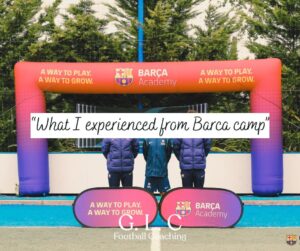
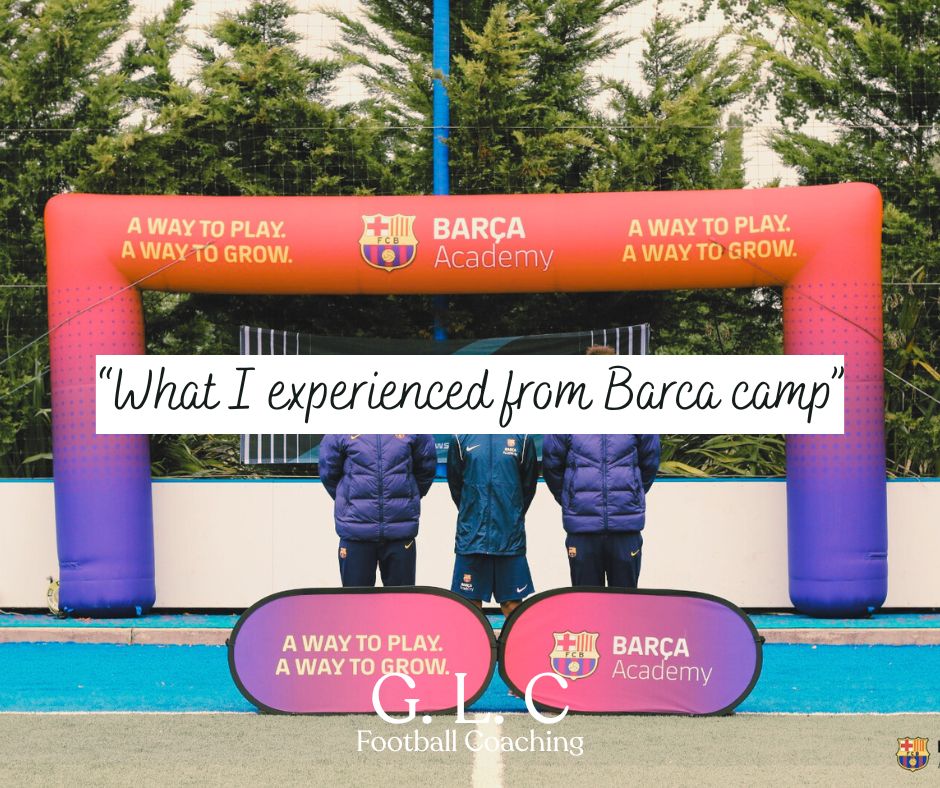
This time, I took part in an FC Barcelona camp held in Christchurch as a coach. I received an offer to be involved as a coach in a Barça camp—a club I have supported since I was a child—and I immediately said yes. As a coach at Glocal, I also saw it as an invaluable opportunity to learn from Spanish Football.
I gained many insights and discoveries through this camp, so in this article I would like to dig deeper into what I want to share as Glocal, along with my personal reflections.
About This Camp
As context, let me briefly share what this camp was like.
This camp was an FC Barcelona camp from Spain, and I participated in the Christchurch edition among those held in New Zealand and Australia. (Barça camps are also held all over the world.)
I did not participate as a helper; I was assigned as a coach responsible for a group of 10–15 children on my own. On top of that, there was a Barça coach who oversaw the whole operation, managing the camp and providing feedback to both the players and us coaches. Including myself, there were four coaches under his supervision.
What made this camp unique was that many of the coaches—besides the Barça coach—were Spanish and Italian. Of course, they could speak English, but when they communicated with each other, they used Spanish. A significant amount of Spanish was being spoken on site, and I believe it was a valuable opportunity to experience a different culture—not only for me as a coach but also for the children playing Football in New Zealand.
The Essence of the Barça Method | Everything Was Deeply Verbalised
I will not go into the detailed contents, but as expected from one of the world’s biggest academies, the Barça Academy method was deeply verbalised, and it was extremely educational for me. Every training activity and every action on the pitch had a clear intention and purpose, and it was verbalised in a way that coaches could explain it to players.
More than that, I was impressed by how the terminology was standardised so that the “Barça method” could be shared consistently.
(For example, in New Zealand, “going to win the ball” is often described as win the ball, but at Barça it is standardised as recover the ball. The reason is connected to the idea that Barça’s premise is to keep the ball—so the terminology is linked back to that philosophy.)
I could list countless examples, but the key point I want to highlight here is this: Football was organised and verbalised systematically as a method.
The Advantages of Being Logical
Here is something I want to think about: What are the advantages of verbalising things?
Football is such a chaotic game with extremely high uncertainty that you could say the same situation never happens twice. Because of that, we never fully know what will happen, and we never fully know what the “correct answer” is. There are countless possible factors that influence the flow of a match, performance, and results.
That drama and artistry are part of the beauty of Football—no, fútbol.
So, what does it mean to be logical in Football?
Reproducibility
One advantage is reproducibility.
As I said, the exact same situation never happens twice, but similar situations occur repeatedly. If we want to play better when a similar situation appears again, we need to understand the situation where we previously made a mistake. To understand it, we need verbalisation—in other words, logical thinking.
Shareability
Another advantage is shareability.
Football is played by 11 players, so communicating ideas is critical. In other words, the ability to explain play is required not only from coaches, but also from players.
And for an academy like Barça, which operates globally, the method and philosophy must be shared even when the coaches are different. When concepts are verbalised, it becomes easier to share the same ideas consistently.
One Important Note Before I Continue
Before I go further, I would like to clarify one important point.
What I write from here is not intended to deny Japanese player development, nor to idealise Western player development. My intention is simply to organise and reflect on the differences in the underlying “structures” that each culture has.
It is not about which is correct. It is about why differences emerge, and how those differences appear on the pitch. That is the purpose of this reflection.
Let me emphasise once again that this is an analysis based on structural differences.
Verbalisation Is Not to Restrict Players, but to Make Them Free
What does “freedom” mean in Football?
I believe it means being able to choose.
In fact, Football becomes more difficult when someone says, “Okay, play however you like.”
To play freely, players need to be in a situation where they can:
- understand what is happening right now
- have multiple options
- choose one of them
Verbalisation (being logical) helps create this situation.
At first glance, you might imagine that “being verbalised” means there are more restrictions.
But in reality, it is the opposite.
When a method is verbalised, it becomes clear:
- what should be prioritised
- what is considered a good decision
- what the improvement points are
When these points are clear, it becomes easier to choose—and players can play more freely.
Of course, this is Barça’s way of thinking in Spain, and the way of thinking could be different in South America, Asia, or Africa. Still, I personally feel very close to this concept, and as Glocal, I want to incorporate verbalisation more and more. I learned a great deal from this perspective.
(And let me say this once: it is natural that ways of thinking differ by country, and it is part of the beauty of Football that those differences appear on the pitch. This is also something I have been exploring for a long time.)
The “Behaviour” of the Spanish and Italian Coaches
The coaching from the Barça coach—and from the other Spanish and Italian coaches—was highly impressive. Even coaching next to them, I felt drawn in by the “presence” and “impact” they had.
Here, I would like to summarise their behaviour in one phrase: instinctive behaviour.
The Intensity of Spanish
One of the most memorable—and also one of the freshest experiences for everyone—was the communication in Spanish. Even as a coach, I was exposed to a large volume of Spanish throughout the camp.
I do not know exactly why, but Spanish conversations felt very powerful.
Was it the tempo, the rhythm, the accent? I cannot say for sure, but it felt like there were factors beyond just volume. (Though the volume was certainly high as well.)
This may be more of a linguistic discussion and could get long, so I will stop here.
“Impact” Was Not the Same as Being Emotional
In Japan, when coaching becomes intense and the atmosphere becomes tense, it is often associated with coaches becoming emotional. But for them, it seemed natural. Perhaps it could be described as: calm inside, passionate in behaviour.
They were not angry, yet their coaching carried impact. As a Japanese coach, I felt there was a lot I could learn from that. Their communication was impressive—not only in words, but with their whole body.
Volume, Distance, Eye Contact, and Body Language
In the Barça method, even these forms of communication were systematised as part of the method. Of course, which tools to choose and how to deliver the message is still up to the coach.
Here again, communication was verbalised so that coaches could coach more freely.
In fact, the Barça coach shared research and ideas not only about training content, but also about communication and coaching, and we had opportunities to discuss them. It was extremely valuable.
Logic and Instinct Are Not Contradictions
From here, I would like to go deeper.
Logic and instinct can sound like contradictory words. But I saw a place where they were not contradictory.
Because It Is Deeply Verbalised, Coaches Can Behave Without Hesitation
As I explained earlier, I believe verbalisation makes it easier to choose, and therefore makes players freer. The same logic applies here.
Because the Barça method is deeply verbalised, coaches who learn it can behave with less hesitation. And I believe this lack of hesitation creates the powerful behaviour that looks “instinctive.”
Because There Is Logic, Emotion Does Not Spiral Out of Control
This is also important.
As an academy and a major organisation, Barça cannot afford coaches becoming emotional in a way that leads to violence or harassment issues. (I am not saying being emotional is always bad.)
By systematising the method, they can suppress emotional spirals, while also allowing emotion to be expressed through logical understanding. That is how I interpret it.
Not “Reason or Instinct” — Both Existed at the Same Time
Rather than a binary choice of reason or instinct, both existed at the same time. That feels like the most accurate way to describe what I experienced at the camp.
Why Is This Balance Harder to Create in Japan and New Zealand?
So why did I—someone who grew up in Japan—find Spanish-style Football and coaching so fresh?
I believe there are structural reasons why it is harder for this balance to occur in Japan.
A Culture of Reading the Air
In a classroom in Japan, depending on the atmosphere, it may be easy—or hard—to raise your hand.
Or you may think: “The coach seems in a bad mood today, so I should play in a way that won’t get me shouted at.”
In Japan, there are many situations where we read the air.
Why Does the Culture of Reading the Air Weaken Player Development Environments?
Japan has a culture of reading the air. You notice this especially when you experience other countries. It is a unique culture, and also a Japanese strength.
In Japan, “reading the air” is not simply reading someone’s emotions. It is more about sensing:
- the temperature of the situation
- what behaviour is acceptable in that moment
- unspoken expectations
This is a highly developed social skill, and one reason Japanese people are internationally respected.
On the other hand, I have a hypothesis that in Football player development environments, it can become a disadvantage.
Because Japanese people read the atmosphere and adjust behaviour accordingly, verbalisation can sometimes be neglected, as things are left to the air.
If things are not verbalised, choices become difficult → and it is not “freedom.”
From this logic, I wondered if the instinctive behaviour I saw from the Spanish coaches might be something that gets lost.
Decision-Making Standards Become Unclear
Also, when we read the air, we may be more likely to choose what will not disturb the atmosphere rather than choose what is truly the best option.
In an environment where reading the air is strong:
- high-intensity play
- unexpected decisions
- challenges that involve failure
can be seen as “disturbing the atmosphere.”
As a result, players unconsciously choose:
- safe passes
- high-percentage options
- decisions influenced by the coach’s eyes
This can inhibit proactive challenge. And these choices are not really “decision-making ability,” but rather “adaptation ability.”
Perhaps this is one reason Japanese players are often evaluated as having high cultural adaptability, but lower decision-making and decisiveness.
Differences in How the Coach’s Role Is Understood
Japanese Coaching | Controlling the Atmosphere
From the coaches who taught me in Japan, and the coaches I have watched in Japan, I feel that a key element in coaching in Japan is controlling the atmosphere.
Just by being present, the atmosphere becomes tense. That ability to create an atmosphere seems closely tied to the coach’s perceived competence. (This does not mean creating tension is always good—relaxing the atmosphere is also part of controlling it.)
In Japan, I have often seen coaches who sit quietly on the bench and watch the match in silence (of course, many coaches are not like that). Perhaps that, too, is a form of coaching through controlling the atmosphere.
Western Coaching | Setting the Environment and Leading
On the other hand, overseas, I have never seen coaches who coach in the same silent way as in Japan. Often, coaches deliver more active coaching than Japanese coaches, giving instructions while the game is ongoing.
From this, I believe Spanish and Italian coaches behave as people who:
- create the environment
- set standards
- take leadership
They do not “adjust to the air.” They are consistently on the side of creating the air.
Therefore, volume, posture, distance, and timing all exist as tools to create the environment. And the key element that supports this is language.
Because neighbouring countries have different languages and cultures—and even within one team, players can have diverse cultural backgrounds—clear language becomes necessary to create consistent standards.
That is why verbalisation is pushed so far, making it easier to align direction:
- regardless of which coach
- regardless of which player
- regardless of which country
And the coach exists as the leader of that environmental design.
The Decisive Difference Between Japan and the West: Where Responsibility Lies
Let me summarise my analysis in one statement.
Based on differences in reading the air, verbalisation, and coaching roles, I believe Japan and the West differ in where responsibility lies.
Japan:
Responsibility for decisions is dispersed across “the air,” “the group,” and “context.”
The West:
Responsibility for decisions is concentrated in the coach (the designer).
That is why Western coaches can make strong statements, correct immediately, and behave with impact.
And that, I believe, is why I felt such a fresh sense of difference from Spanish coaches—both in this Barça camp (and even when I played in Spain before).
(Again: this is not about superiority, but about differences in underlying structure.)
As Glocal Football
As Glocal Football | A Player Development Environment That Combines “Air” and “Language”
Through observing player development environments in Japan and the West, I feel both have clear characteristics and strengths.
Japanese environments are strong in sensing the situation and reading the air.
Western environments, on the other hand, clearly share principles and standards through language.
What Glocal Football aims for is not choosing one side.
It is an environment that combines the strengths of both.
Why We Do Not Copy Barça Directly
The FC Barcelona method is a representative example of Western-style verbalised player development.
However, that method works because it is rooted in Spanish culture and assumptions. Therefore, if we only take the form and copy it as it is, it will not create the same effect.
At Glocal, we value learning not just what is being done, but why that way of thinking is necessary.
Using Japan’s Strength: Reading the Air
Japanese player development culture has a strength in valuing relationships between players and the atmosphere of the group.
At Glocal, we do not deny this ability to sense the air. Rather, we believe it is essential for understanding players’ conditions and relationships.
However, we do not leave decision-making only to the air.
Using Western Verbalisation as the Foundation
In player development, it is important that what we value and what we prioritise are shared through language.
At Glocal, we verbalise standards and principles as much as possible. This allows players to play based on understanding rather than the coach’s mood or the atmosphere. Verbalisation also develops “reproducibility” and “shareability.”
Verbalisation is not to restrict players. It is the foundation for free decision-making.
Using “Impact” as Design, Not Emotion
The impact I learned from Western coaches is not something emotional. It is a tool to tighten the environment and create focus.
At Glocal, we do not keep intensity high all the time. We use it intentionally when needed. Intensity, like reading the air, is part of environmental design.
Adjusting to New Zealand’s Environment
In New Zealand, the player development environment is not as strongly shaped by reading the air as in Japan, and it is not as strongly premised on verbalisation and intensity as in the West. New Zealand is also a place where players with diverse cultural backgrounds tend to gather—even more so than in many Western environments.
Therefore, at Glocal, we adjust voice volume and distance depending on the situation. We aim for a middle position that connects Japanese sensitivity with Western clarity.
Combining “Air” and “Language”
What Glocal Football aims for is an environment where the ability to read the air and verbalised standards coexist.
Through verbalisation, we increase reproducibility and shareability, and develop decision-making ability.
On top of that, by spreading Japan’s ability to read the air, we increase adaptability.
By combining these two, we believe we can develop players who can thrive in any country and in any environment—Glocal Football’s ultimate goal.
We do not bring the Global approach in 그대로. We translate it to fit the Local environment.
That is Glocal Football’s approach to player development.
We are still experimenting and refining whether we can truly create this environment.
Conclusion | What Does Player Development Need?
The above is my analysis of cross-cultural coaching, based on my experience at the Barça camp.
Being quiet does not equal being kind.
Being strict does not equal being angry.
Atmosphere, air, language, communication—everything is complexly intertwined, and coaching is created through that combination.
So what is good player development?
I still do not have the answer, but I want to keep exploring it by comparing different countries and cultures.