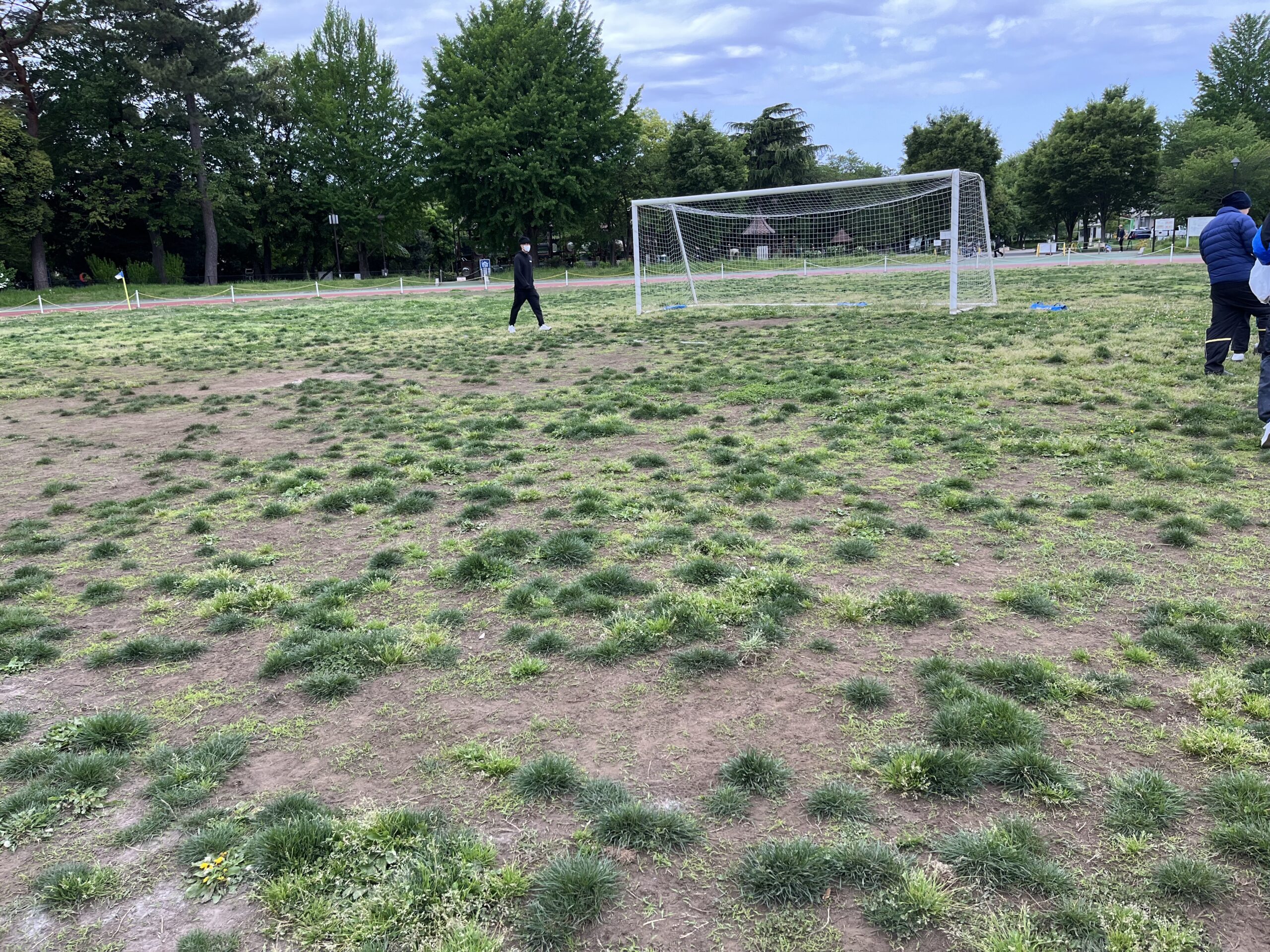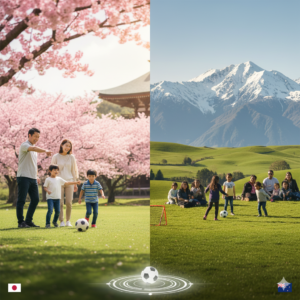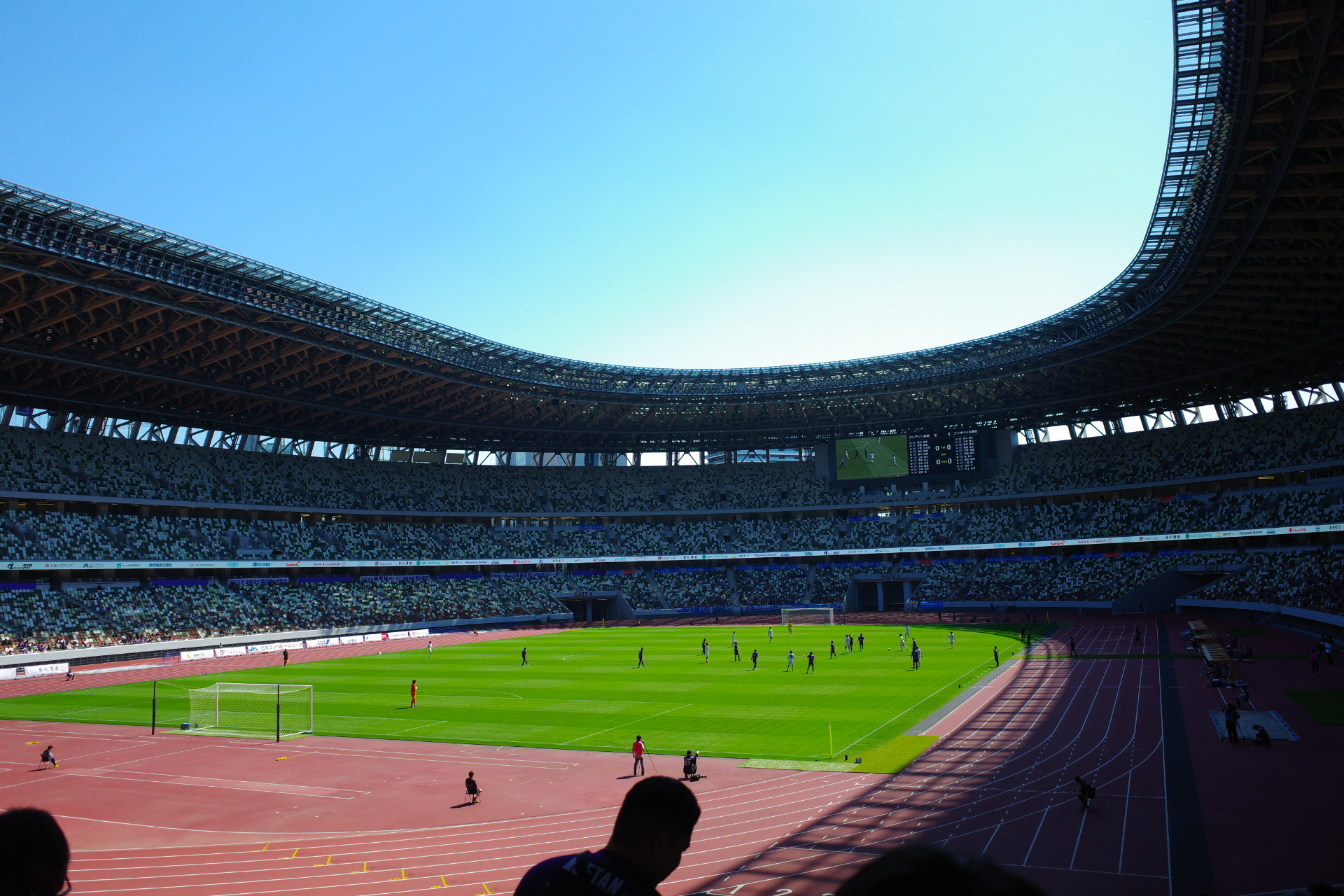
When thinking about choosing a football club, the underlying environment can feel very different between Japan and New Zealand, even when looking at children of the same age group.
This difference is not simply about the philosophy of individual clubs or coaches.
Rather, it comes from the structural foundations that support youth football as a whole.
Understanding these assumptions is an important first step in rethinking how we approach club selection.
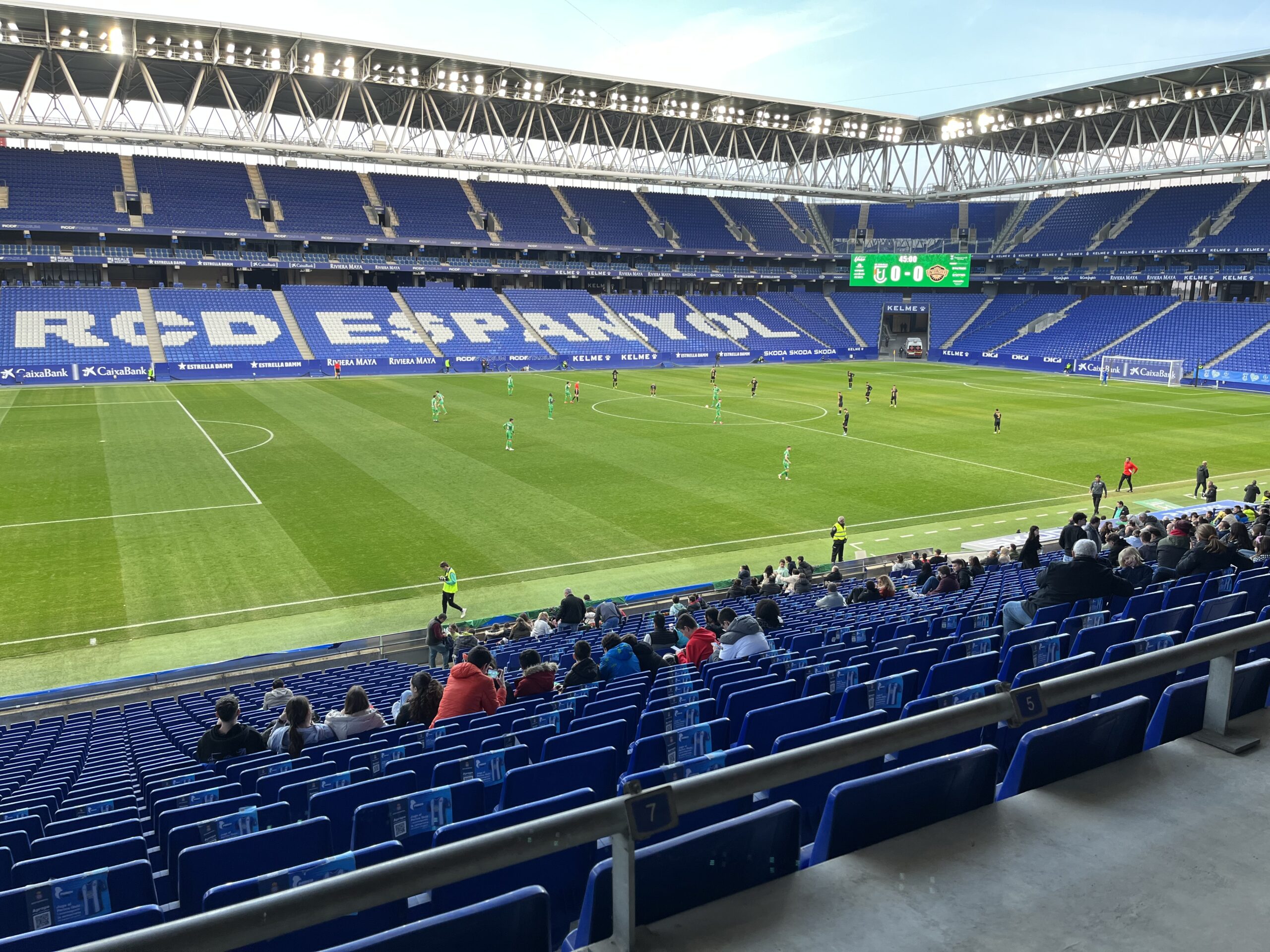
The Japanese “Assumption”[Competition from a Young Age and Selection Based on Results]
Japan’s Youth Football Structure (1)
Results-Based Evaluation Starting in Primary and Junior High School
In Japan, competition and selection begin at a very young age.
From primary school, systems such as regional training centres, representative teams, and movement toward stronger clubs create an environment where results and achievements are often used as key indicators of evaluation.
By junior high school age, this tendency becomes even stronger.
League results, tournament performance, whether a player starts matches, and whether the team is winning all become highly visible measures.
Even though this is a stage of ongoing development, there are many situations where team results are prioritised over individual growth.
Many coaches genuinely care about the long-term development of each player.
However, the structure itself — where results are easily measured and compared — often pushes environments toward favouring players who can contribute immediately.
Japan’s Youth Football Structure (2)
The Challenge of Only Being Able to Change Environments Every Three Years
This results-oriented structure is further influenced by another uniquely Japanese feature:
limited opportunities to change environments.
In Japan, both junior high school and high school football are generally organised in three-year cycles.
Changing clubs or teams during this period is difficult, both institutionally and psychologically.
As a result, the initial club choice carries significant weight.
- “We cannot afford to get this wrong.”
- “This decision might affect the future.”
Even if a player feels the environment is not right, the options often become limited to:
- Enduring the situation
- Quitting football altogether
This structure makes it difficult for players and families to see changing environments as a way to reset and grow again.
What Happens When These Two Factors Overlap
When players are expected to produce results from a young age,
and at the same time find it difficult to change their environment,
several issues tend to arise:
- Players who are still developing are less likely to be properly valued
- Players lose confidence simply because the environment does not suit them
- Players who could have continued end up leaving football altogether
These outcomes are not necessarily due to a lack of ability, but rather the structure surrounding them.
The New Zealand Assumption
A Club-Based Football Culture and Its Structural Characteristics
In contrast, youth football in New Zealand operates under very different assumptions.
The football culture here is fundamentally club-based.
Most players develop primarily through local clubs rather than school-based systems.
A club is seen not only as a place of belonging, but as one possible environment for growth.
(1) Clubs Must Continually Be “Chosen”
In New Zealand, joining a club does not mean the relationship is fixed long-term.
Through annual registrations and regular team restructuring, the relationship between players and clubs is continuously reassessed.
As a result, clubs themselves must reflect on:
- What kind of experiences they are providing
- Whether they are functioning as a place for development
Structurally, players choose clubs, not the other way around.
(2) Annual Restructuring and Flexible Evaluation
In many clubs, teams are reorganised each year.
Player evaluations are rarely fixed labels carried over long-term.
Instead, assessments are updated based on questions such as:
“How did the player develop this year?” and
“What experiences are needed next?”
Because of this:
- Players who were not highly rated one year can make significant progress the next
- Players may flourish simply by changing environments
This creates a structure where players in the middle of their development are less likely to be left behind.
(3) Moving Clubs Is Not Seen as Failure
In New Zealand, it is not unusual to see players move between clubs or teams, even during a season.
Such moves are generally not viewed as signs of weakness or failure.
Instead, they are accepted as a natural process of finding a better-suited environment.
This cultural acceptance reduces the need for players to endure unsuitable environments and helps lower the risk of them losing their enjoyment of football altogether.
(4) Why the Role of Parents Looks Different
Within this structure, the role of parents naturally changes.
Rather than trying to make the “perfect” choice once,
the parental role becomes one of observing, reflecting, and supporting ongoing choices.
Instead of focusing only on results, parents are encouraged to consider:
- How involved their child is
- What their child is learning
- Whether there is a healthy balance between enjoyment and challenge
Not Which Is Better — But Different Roles
The youth football environments in Japan and New Zealand should not be compared in terms of superiority.
Japan tends to operate within a structure where:
- Results are demanded early
- Changing environments is difficult
New Zealand tends to operate within a structure where:
- Football is club-based
- Players can continue to reselect environments as they grow
With different assumptions, it is natural that approaches to club selection — and parental involvement — also differ.
A Message to Parents in New Zealand
How to Make the Most of This Structure
One of the defining features of the New Zealand football environment is that a single decision does not determine everything.
Because of this, parents can play an important role by:
- Continuously observing whether the current environment still suits their child
- Looking beyond results to consider involvement and learning
- Remaining open to changing environments when necessary
How thoughtfully this flexibility is used can have a significant impact on whether a child continues to enjoy and engage with football over the long term.
In the next article, we will organise five key perspectives parents can use when choosing a club, focusing on how children can continue to enjoy and grow through football.
By calmly understanding the systems and structures around youth football,
the way we see club selection can become far more three-dimensional.